Christian Mingle vs. Upward: A Faith-Based Choice

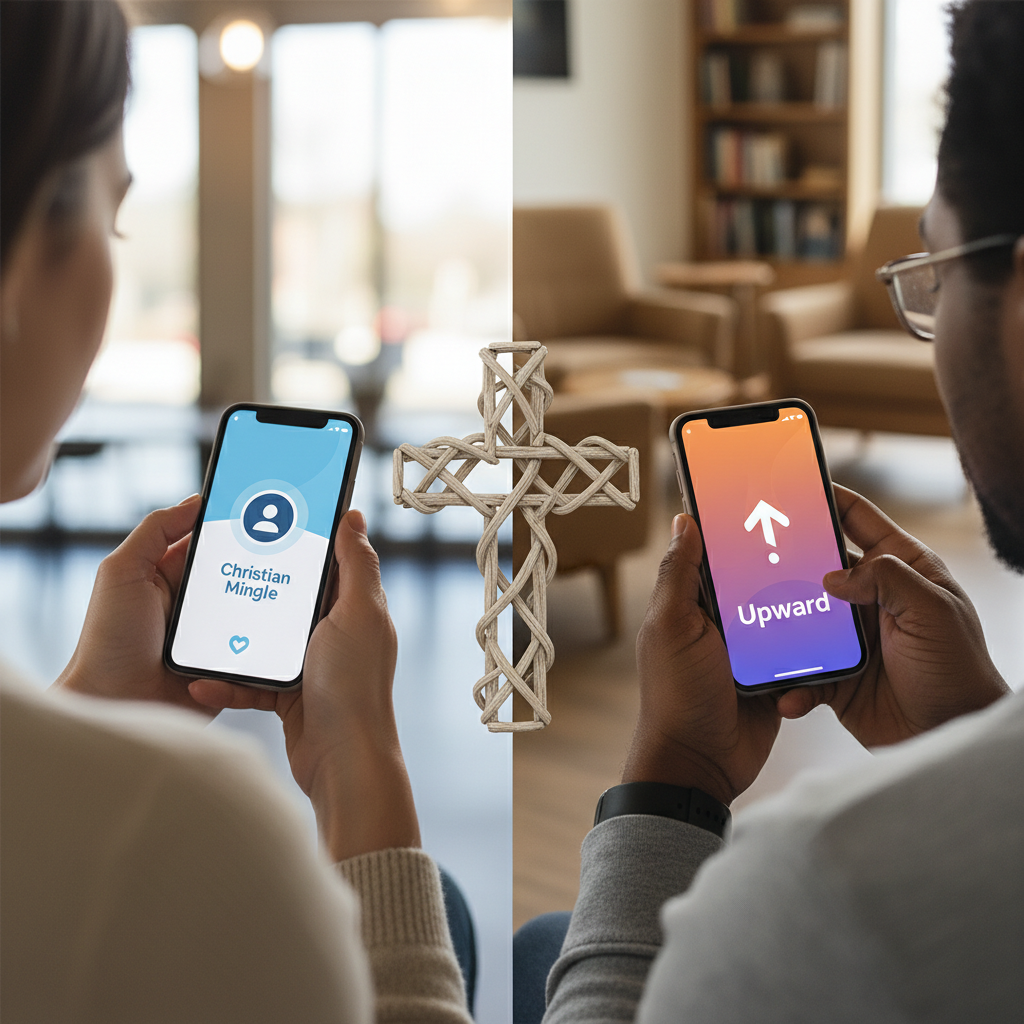
For Christian singles in the United States, navigating the world of online dating presents a unique challenge: finding a platform that aligns with both relationship goals and spiritual values. Two prominent names in this space are Christian Mingle and Upward. While both aim to connect believers, they offer fundamentally different experiences tailored to distinct audiences and priorities. Understanding these differences is key to choosing the app that best supports your personal faith journey. According to a study from Pew Research Center, many religiously-affiliated Americans are open to finding partners online, making these platforms increasingly relevant. Pew Research Center.
You will stay on this site.
Christian Mingle has long been a cornerstone of faith-based dating, establishing its reputation over two decades. In contrast, Upward is a newer entrant, bringing a modern, mobile-first approach that resonates with a younger generation of Christians. This comparison will delve into their core philosophies, key features, user demographics, and pricing structures to help you determine which service is the right fit for you.
Core Philosophy and Target Audience
The most significant distinction between the two apps lies in their intended user base and overall mission. Your personal dating style and what you seek in a partner will heavily influence which platform feels more natural and effective.
Christian Mingle: Established for Serious Relationships
Christian Mingle markets itself as the leading platform for Christian singles seeking God-centered, serious relationships that can lead to marriage. Launched in 2001, it has a long-standing reputation and tends to attract a demographic that is more established in their careers and faith, often in their late 20s, 30s, and beyond. The platform’s structure encourages detailed profiles that go beyond surface-level interests, asking specific questions about faith practices, church involvement, and denominational preferences. This focus on depth is designed to facilitate connections based on shared core values, making it a preferred choice for those who are explicitly dating with marriage in mind. A review by the DatingAdvice staff highlights its focus on users looking for “meaningful connections.”

Upward: Modern Dating for a Younger Generation
Upward launched in 2020 with a clear goal: to create a dedicated space for young Christian singles, primarily Gen Z and Millennials. Its slogan, “the #1 dating app for Christian singles,” reflects its rapid growth and adoption. The user experience is heavily influenced by mainstream dating apps, featuring a swipe-right/swipe-left mechanism that prioritizes quick impressions and mutual interest. While users can state their denomination and faith views, the profiles are generally less comprehensive than those on Christian Mingle. Upward is often seen as a place for Christians to meet, date, and explore relationships in a less formal context, which can range from casual dating to finding a serious partner. Its modern interface and mobile-centric design make it accessible and familiar to those accustomed to apps like Tinder or Hinge, but within a faith-focused community. A report on the app’s launch emphasized its goal to serve a younger Christian audience that felt underserved by existing options. PR Newswire.
Feature Set and User Experience
The way you interact with potential matches differs greatly between Christian Mingle and Upward, reflecting their underlying philosophies.
Profile Creation and Customization
On Christian Mingle, setting up a profile is a more deliberate process. You are prompted to provide extensive information not only about your personality and hobbies but also about your faith. This includes fields for your denomination, church attendance frequency, and personal essays about what your faith means to you. This depth allows users to filter matches based on specific spiritual criteria. Upward, by contrast, offers a quicker setup. Users connect their profile and upload photos, writing a brief bio and selecting from a list of faith-related statements. The emphasis is on visual first impressions and a concise summary, making it easier to start swiping quickly.

Matching and Communication
Christian Mingle provides multiple ways to find matches. It has a “Discovery” feature that suggests compatible profiles based on your preferences and an algorithm, but it also allows you to browse and search the entire user base using detailed filters like age, location, and religious practice. However, communication is often restricted for free members; a premium subscription is typically required to send and read messages freely. Upward’s matching system is simpler and based on mutual “likes.” You are shown profiles one by one, and if both you and another user swipe right on each other, you become a match and can begin chatting for free. This model encourages active participation but relies on mutual, immediate attraction rather than in-depth profile analysis before matching. Healthline’s review of various apps outlines these different communication models and their impact on user experience.
Cost of Membership: Free vs. Premium
Both platforms operate on a “freemium” model, but the value of a free versus paid membership varies significantly.
Christian Mingle Subscription
The free experience on Christian Mingle is quite limited. Free members can create a profile, browse users, and receive “smiles,” but they cannot initiate conversations or read most messages from other users. To meaningfully connect, a premium subscription is almost a necessity. Premium plans are offered in multi-month packages (e.g., 1, 3, or 6 months), with the per-month cost decreasing with longer commitments. A paid plan unlocks unlimited messaging, the ability to see who has viewed or liked your profile, and enhanced privacy controls.
Upward Premium Features
Upward allows free users to match and message, making it a more functional free app than Christian Mingle. However, it offers a premium subscription called “Upward Elite” that provides advantages. These include an unlimited number of likes, five “Super Likes” per week to stand out to someone special, a monthly “Boost” to increase profile visibility in your area, and the ability to undo your last swipe. This model allows for a complete experience without paying, but offers paid features for those who want to accelerate or enhance their search.
When choosing a faith-based dating app, the “right” choice isn’t just about the features; it’s about the community. Consider whether you are looking for a broad community with a modern interface or a more curated group of individuals who have signaled a high Cintent for marriage and deep spiritual alignment from the start.
Which app is better for finding a serious, long-term relationship?
Christian Mingle is generally considered better for those specifically seeking marriage. Its detailed profiles and user base, which tends to be older and more intentional, are geared toward serious, long-term commitment. Upward can also lead to serious relationships, but its wider scope includes more casual dating.
Can I use these apps for free?
You can use both for free, but with different levels of functionality. On Upward, free users can match and message, offering a complete basic experience. On Christian Mingle, the free version is very limited, and a paid subscription is generally necessary to communicate effectively with potential matches.
Is there a significant age difference between the users on each app?
Yes. Upward’s primary audience is younger Christians, mainly Gen Z and Millennials (ages 18-35). Christian Mingle tends to have a broader age range, but often skews slightly older, with a significant user base in their 30s, 40s, and 50s.
How do the apps verify that users are Christian?
Neither app has a formal verification process to confirm a user’s faith. Both operate on an honor system where users self-identify as Christian. Users can state their denomination and describe their faith, but it’s up to individuals to use discernment and conversation to gauge the authenticity of a match’s beliefs.
Which app has a better user interface?
This is subjective. Upward has a modern, clean, and intuitive swipe-based interface that many younger users prefer. Christian Mingle has a more traditional, desktop-friendly design that focuses on detailed profiles and search filters, which might feel more comprehensive but less “fast” to some users.
Are these apps available for both iOS and Android?
Yes, both Christian Mingle and Upward are available as mobile applications on both the Apple App Store (for iOS devices) and the Google Play Store (for Android devices).
Do I have to belong to a specific denomination?
No, both platforms welcome Christians from all denominations, including but not limited to Catholic, Baptist, Methodist, Pentecostal, Nondenominational, and many others. You can specify your denomination in your profile to find others with similar backgrounds.
Ultimately, the decision between Christian Mingle and Upward comes down to your personal dating goals and preferences. If you are focused intently on finding a marriage partner and value deep, faith-based compatibility from the outset, Christian Mingle’s established, detailed approach may be the ideal choice. If you are younger and prefer a more modern, fast-paced dating experience within a Christian community that allows for a wider range of relationship intentions, Upward’s platform is likely a better fit.
Conditions may vary; check official rules.
Sources: Christianity Today, Catholic News Agency
- The Top 500 Apps in the United States – Conversion — conversion.ag
- Foto por Arturo Añez. — pexels.com